
Teen Substance Use Disorder Treatment
At Evolve, we provide evidence-based teen substance use disorder treatment that addresses the underlying causes of substance use while supporting long-term emotional health and well-being.

Adolescent Substance Use Treatment at Evolve
Evolve specializes in treating teens ages 12–17 who are struggling with substance use and/or co-occurring mental health conditions such as depression, anxiety, and trauma. Because substance use often develops alongside emotional or behavioral challenges, our integrated approach focuses on treating the whole person, not just the symptoms.
Through individual therapy, family involvement, psychiatric care, recovery groups, and skill-building, we help teens identify triggers, develop healthier coping strategies, and strengthen family relationships.
of the teens we treat have tried alcohol or illegal substances
of at-risk teens experience a reduction in substance use risk
of our teens report overall improvement during treatment

How Evolve Measures Treatment Success
Evolve uses an advanced, research-backed assessment tool called the Kiddie Computerized Adaptive Test (K-CAT) to better understand each teen’s needs and track their progress over time. Designed specifically for adolescents, the K-CAT helps our clinical team measure symptoms and tailor care to each individual. Teens complete the assessment at admission, every two weeks during treatment, and at discharge, allowing our team to monitor progress, adjust treatment as needed, and ensure each teen is moving toward meaningful improvement.
By comparing admission and discharge scores, Evolve is able to clearly demonstrate meaningful, measurable improvements in substance use disorder symptoms among teens. This gives families confidence that their child is receiving effective, evidence-based care. These outcomes not only highlight the real progress our clients achieve during treatment, but also reflect our ongoing commitment to refining and advancing best practices in adolescent substance use disorder care.
Proven Treatment Outcomes for Teen Substance Use Disorder
The K-CAT substance use assessment evaluates the frequency and impact of substance use, as well as the severity of related behaviors such as cravings, withdrawal, and risky behaviors. It assigns risk scores based on the intensity and frequency of use, along with the degree of functional impairment in social, academic, and family life.
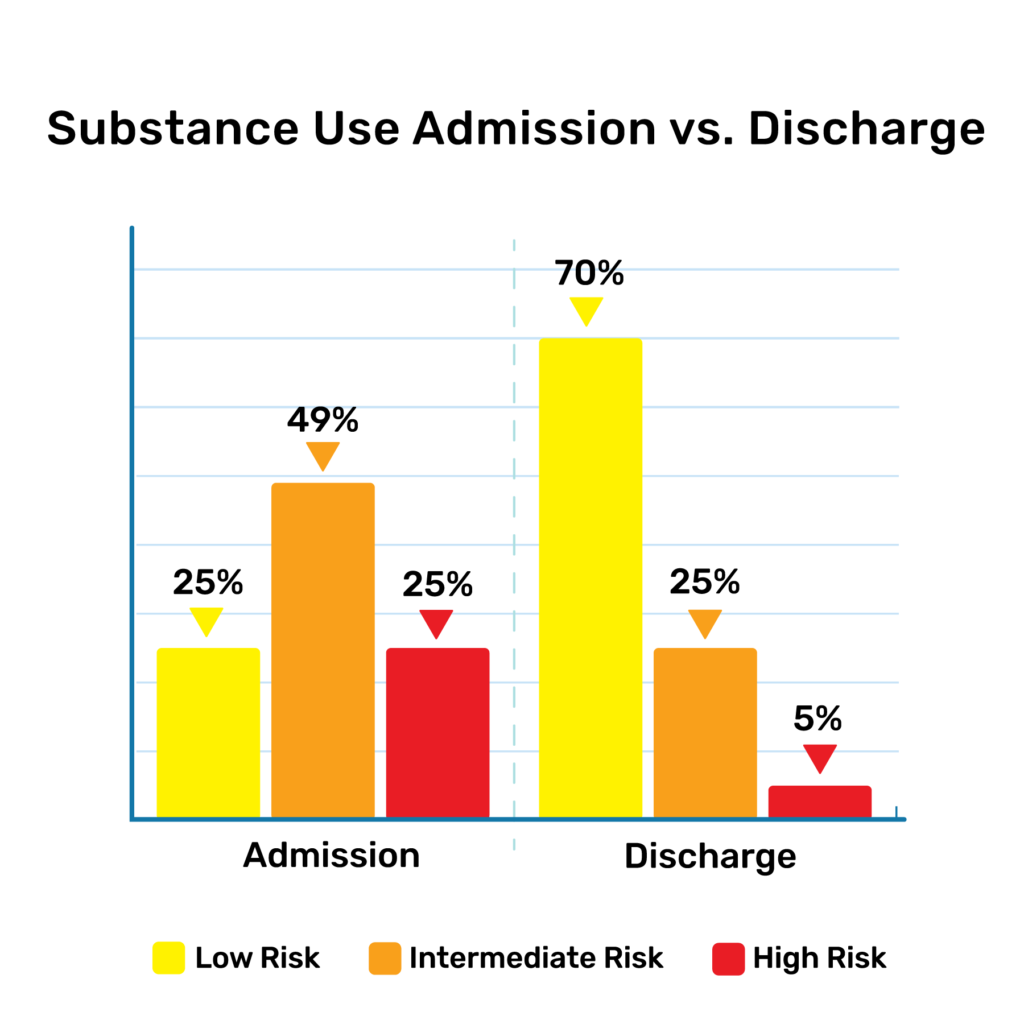
At admission, many residential clients scored in the intermediate-to-high risk range, indicating frequent substance use that caused significant disruption to daily functioning, often involving clear dependency, cravings, withdrawal symptoms, and risky behaviors that heavily interfered with school, relationships, and home life.
By discharge, the level of risk had decreased significantly, with the percentage of clients in the high risk category dropping from 38% to 16%, and the percentage of clients in the low risk category increasing significantly from 18% to 51%, indicating highly manageable behavior with minimal disruption to daily life.
Overall, substance use risk scores decreased by 29% on average from admission to discharge, demonstrating meaningful improvement during residential treatment.
When you choose Evolve, you are choosing a program that combines compassionate care with proven results. Every day in treatment is purposeful, guided by evidence-based therapies and informed by real-time progress tracking. We continually adjust each teen’s care to ensure they are moving forward, building the skills, confidence, and resilience they need to thrive long after treatment ends. To learn more about Evolve’s clinical outcomes studies and the effectiveness of our programs, visit our outcomes page and download the full report.
Evolve's Programs and Levels of Care
24/7 Support & Supervision
Residential Treatment (RTC)
- 24/7 structured support in a safe and therapeutic home-like environment.
- Comprehensive care for teens with moderate to severe substance use disorder, including co-occurring mental health challenges.
- Individualized therapy, family involvement, psychiatric services, and experiential activities that promote lasting growth and recovery.
Full Day Program
Partial Hospitalization (PHP)
- Structured daytime treatment with the ability to return home each evening.
- Intensive therapy, skill-building groups, and psychiatric support several days per week.
- A bridge between residential and outpatient care, helping teens transition back to daily life while maintaining clinical support.
After School Program
Intensive Outpatient (IOP)
- Flexible treatment that allows teens to stay enrolled in school, live at home, and maintain their daily routines.
- Focused support for relapse prevention, coping skills, and family involvement.
- Empowers teens to apply what they’ve learned in the real world, providing ongoing clinical support as they successfully transition back to their regular lives.
Flexible Online Care
Outpatient Virtual Therapy & Psychiatry
- Convenient access to quality care from home, making treatment more accessible for teens and families.
- Individual therapy, family sessions, and psychiatric support delivered through a secure virtual platform.
- Ongoing support to maintain progress and reduce the risk of relapse after higher levels of care.
Not Sure What Level of Care Your Teens Needs?
Get a free assessment with our admissions team. Call to speak with someone directly or fill out our form online to get started.
Evidence-Based Treatment for Teen Substance Use Disorder
At Evolve, we use evidence-based approaches that help teens address substance use, strengthen emotional resilience, and develop healthier coping skills. Our integrated treatment model supports the whole teen by addressing underlying mental health challenges, improving family relationships, and promoting long-term well-being. Every treatment plan is personalized to meet your teen’s unique needs, strengths, and goals.

What Are the Signs of Substance Abuse in Teens?
Recognizing the signs early can help you intervene before substance use escalates. While some changes are typical of adolescence, certain patterns may indicate a deeper problem:
- Sudden changes in friend groups or secretive behavior
- Declining grades, skipping school, or loss of interest in activities they once enjoyed
- Mood swings, irritability, or increased anxiety and depression
- Physical signs like bloodshot eyes, changes in appetite or sleep, or unexplained injuries
- Lying about whereabouts or becoming defensive when asked about substance use
- Withdrawal from family, increased conflict at home, or breaking curfew
- Risky behaviors like driving under the influence or legal trouble
- Finding drug paraphernalia, alcohol, or missing prescription medications
When to Seek Professional Help for Teen Substance Use Disorder
When it comes to teens, any level of substance use is a valid reason to reach out for professional support. However, it is especially critical to seek help when substance use is accompanied by specific warning signs that affect your teen’s daily life. These include declining grades, skipping school, increasing conflict with parents, or showing irritability when going a day or two without using. Early intervention can make a meaningful difference, so if you’re concerned about your teen’s substance use, our free professional assessment can help determine the best path forward.
If you are concerned about your teen’s immediate safety, or if they are showing a clear dependency, experiencing severe cravings and withdrawal symptoms, or engaging in increasingly desperate and risky behaviors like stealing to obtain substances, seek professional help right away.
Frequently Asked Questions About Teen Substance Use Disorder Treatment
What Is Teen Substance Use Disorder (SUD)?
Teen substance use disorder is a medical condition characterized by the compulsive use of drugs or alcohol despite harmful consequences. It affects the brain’s reward system, making it difficult for teens to stop using on their own. SUD ranges from mild to severe and often co-occurs with mental health conditions like anxiety, depression, or trauma.
Can Teens Recover From Substance Use Disorder?
Absolutely. Adolescents respond very well to treatment, especially when they receive comprehensive, evidence-based care that addresses both substance use and underlying emotional challenges. With the right support, teens can develop healthy coping skills, rebuild relationships, and go on to lead fulfilling, substance-free lives.
What Happens If My Teen Refuses Treatment?
Resistance to treatment is common and does not mean your teen cannot benefit from care. Our team works to build trust and motivation over time, helping teens become more engaged in the treatment process. When needed, we can also help families navigate difficult decisions and establish appropriate boundaries to support their teen’s safety and well-being.
What Should Parents Expect When Their Teen Begins Treatment?
Treatment begins with a comprehensive assessment to understand your teen’s needs and determine the appropriate level of care. From there, we create a personalized treatment plan and involve parents through family therapy, regular communication, and ongoing support throughout the recovery process.
How Long Does Treatment for Teen Substance Use Disorder Typically Last?
Treatment length varies based on each teen’s needs, level of care, and progress. Our residential programs last a few weeks, while ongoing outpatient support may continue for several months. Our team works closely with families to create a personalized treatment and transition plan.
Can My Teen Continue School While Receiving Treatment?
Yes. Teens in our programs can continue their education while receiving treatment. We help families balance academic responsibilities with clinical care, supporting both recovery and educational progress.
Does Insurance Cover Teen Substance Use Disorder Treatment?
Many insurance plans cover teen substance use disorder treatment. Our admissions team can verify your benefits, explain your coverage, and review any potential out-of-pocket costs before treatment begins.
How Can Parents Support Their Teen During Treatment?
Your involvement is essential. Participate actively in family therapy, stay in regular communication with the treatment team, and educate yourself about substance use and recovery. Set clear, consistent boundaries at home while also offering empathy and encouragement. Celebrate small wins, be patient with setbacks, and take care of your own well-being, recovery is a family process.
Related Resources




Recovery From Teen Substance Use Disorder Is Possible. Let’s Find the Right Path Forward.
You don’t have to face this alone. At Evolve, we’ve helped hundreds of families find hope through personalized adolescent substance use treatment. Recovery is possible, and we’re here to support your family every step of the way.