
Anxiety Treatment for Teens
Anxiety can affect every part of a teen’s life, from school and relationships to everyday activities. Evolve’s teen anxiety treatment programs help adolescents ages 12–17 build coping skills, gain confidence, and learn how to manage anxiety through evidence-based care.

How Evolve Approaches Teen Anxiety Treatment
We help teens understand what’s driving their anxiety and develop healthier ways to respond. Our approach combines individual therapy, skill-building groups, family support, and psychiatric care when needed.
Treatment is tailored to each teen’s unique challenges, developmental needs, and strengths. We also work closely with families, helping parents learn how to support recovery in ways that promote lasting progress and resilience.
of the teens we treat come to us actively battling anxiety
of these teens experience a meaningful reduction in symptoms
of our teens report overall improvement during treatment

How Evolve Measures Treatment Success
Evolve uses an advanced, research-backed assessment tool called the Kiddie Computerized Adaptive Test (K-CAT) to better understand each teen’s needs and track their progress over time. Designed specifically for adolescents, the K-CAT helps our clinical team measure symptoms and tailor care to each individual. Teens complete the assessment at admission, every two weeks during treatment, and at discharge, allowing our team to monitor progress, adjust treatment as needed, and ensure each teen is moving toward meaningful improvement.
By comparing admission and discharge scores, Evolve is able to clearly demonstrate meaningful, measurable improvements in anxiety symptoms among teens. This gives families confidence that their child is receiving effective, evidence-based care. These outcomes not only highlight the real progress our clients achieve during treatment but also reflect our ongoing commitment to refining and advancing best practices in adolescent anxiety care.
Proven Treatment Outcomes for Teen Anxiety
The K-CAT anxiety assessment evaluates symptoms such as worry thoughts, restlessness, and physical symptoms, as well as how these symptoms affect daily functioning. It assigns severity scores based on the frequency and intensity of symptoms and the degree to which they interfere with everyday life.
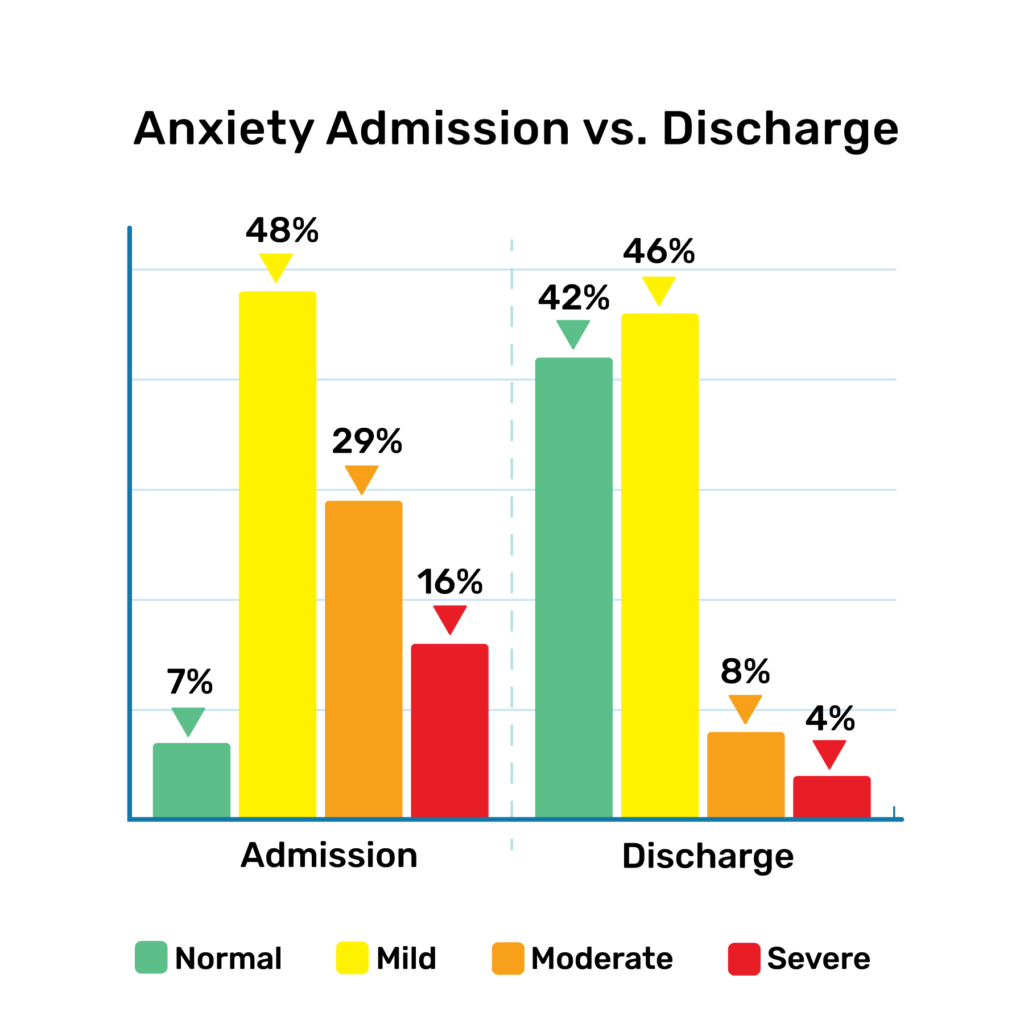
At admission, many residential clients scored in the moderate-to-severe range, indicating frequent and intense anxiety that interfered with school, social activities, and performance, impaired daily functioning, and often led to avoidance behaviors and debilitating fear or worry.
By discharge, the severity of symptoms had decreased significantly, with the percentage of clients in the severe category dropping to just 1% and the moderate category decreasing from 37% to 10%, indicating highly manageable symptoms and improved daily functioning.
Overall, anxiety severity scores decreased by 31% on average from admission to discharge, demonstrating meaningful improvement during residential treatment.
When you choose Evolve, you are choosing a program that combines compassionate care with proven results. Every day in treatment is purposeful, guided by evidence-based therapies and informed by real-time progress tracking. We continually adjust each teen’s care to ensure they are moving forward, building the skills, confidence, and resilience they need to thrive long after treatment ends. To learn more about Evolve’s clinical outcomes studies and the effectiveness of our programs, visit our outcomes page and download the full report.
Teen Anxiety Treatment Programs and Levels of Care at Evolve
24/7 Support & Supervision
Residential Treatment (RTC)
- Provides 24/7 support in a structured environment for teens whose anxiety significantly affects daily functioning.
- Offers a structured environment that includes individual therapy, group therapy, experiential therapy, psychiatric care, family involvement, and skills coaching.
- Offers comprehensive care for teens with severe anxiety, co-occurring mental health concerns, or those who have not responded adequately to outpatient treatment.
Full Day Program
Partial Hospitalization (PHP)
- Provides 24/7 support in a structured environment for teens whose anxiety significantly affects daily functioning.
- Offers a structured environment that includes individual therapy, group therapy, experiential therapy, psychiatric care, family involvement, and skills coaching.
- Offers comprehensive care for teens with severe anxiety, co-occurring mental health concerns, or those who have not responded adequately to outpatient treatment.
After School Program
Intensive Outpatient (IOP)
- Provides structured treatment several times per week while allowing teens to continue attending school and living at home.
- Offers consistent therapeutic support for adolescents who need more than traditional weekly therapy to manage anxiety effectively.
- Helps teens apply coping skills in real-world settings.
Flexible Online Care
Outpatient Virtual Therapy & Psychiatry
- Provides convenient access to quality care from the comfort of home.
- Individual therapy, group sessions, family sessions, and psychiatric support delivered through a secure virtual platform.
- Offers ongoing support to maintain progress, helping teens build on their clinical gains from home.
Not Sure What Level of Care Your Teens Needs?
Get a free assessment with our admissions team. Call to speak with someone directly or fill out our form online to get started.
Evidence-Based Treatment Methods for Teen Anxiety Disorders
Evolve uses evidence-based therapies and supportive interventions tailored to each teen’s needs, helping adolescents address the thoughts, behaviors, and underlying factors that contribute to anxiety.

Signs of Anxiety in Teens
Anxiety in teenagers often looks different than it does in adults. It may show up as irritability, anger, or physical complaints rather than obvious worry. Watch for these signs:
- Avoiding school, social events, or activities they used to enjoy
- Frequent physical complaints (headaches, stomachaches, nausea) with no medical cause
- Excessive worry about performance, health, safety, or the future
- Difficulty sleeping, including trouble falling asleep or frequent nightmares
- Panic attacks with rapid heartbeat, sweating, trembling, or feeling like they can't breathe
- Perfectionism or procrastination driven by fear of failure
- Irritability, anger outbursts, or emotional meltdowns over small changes
- Social withdrawal or difficulty making and keeping friends
- Constant need for reassurance from parents or caregivers
When to Seek Professional Anxiety Treatment for Teens
While occasional worry or a sleepless night is a normal part of adolescence, it may be time to seek professional help when anxiety starts significantly disrupting your teen’s daily life. You should consider reaching out if you notice specific warning signs like frequent stomachaches or tension headaches, trouble concentrating, a drop in test scores, or your teen constantly seeming “on edge” and actively avoiding situations that cause them anxiety. Early intervention can make a meaningful difference, so if you’re concerned about your teen’s mental health, trust your instincts and reach out for help.
If your teen’s anxiety is resulting in persistent, debilitating symptoms such as refusing to go to school, experiencing frequent panic attacks, expressing an intense fear that “something bad will happen,” or becoming largely housebound and isolated from friends due to fear, seek professional help right away.
Frequently Asked Questions About Anxiety Treatment for Teens
What types of anxiety disorders can affect teenagers?
Teenagers can experience several types of anxiety disorders, including generalized anxiety disorder, social anxiety disorder, panic disorder, specific phobias, and separation anxiety. A thorough assessment can help identify your teen’s specific challenges and guide the most effective treatment approach.
What happens if teen anxiety goes untreated?
Untreated anxiety typically worsens over time and can lead to school refusal, social isolation, depression, substance use as a coping mechanism, and increased risk of anxiety disorders in adulthood. Teens may also develop avoidance patterns that limit their opportunities and independence, making it harder to launch successfully into young adulthood. Early intervention prevents these complications and teaches skills that protect mental health long-term.
How is anxiety treatment tailored to a teen's individual needs?
Each teen receives a personalized treatment plan based on their anxiety symptoms, individual challenges, family dynamics, and treatment goals. Our clinical team regularly adjusts the plan to ensure care remains aligned with their progress and evolving needs.
What is the difference between residential, PHP, and IOP anxiety treatment?
The main difference is intensity and structure. Residential treatment provides 24/7 care in a therapeutic environment for teens who need constant support. PHP offers full-day programming (5-6 hours daily) with evenings at home, suitable for those needing intensive treatment without overnight care. IOP involves several hours of treatment per week while teens maintain most of their regular schedule, working well for moderate anxiety or as a step-down. Our team helps you determine which level matches your teen’s current functioning and safety needs.
What happens during a teen anxiety treatment program?
A teen anxiety treatment program typically includes individual therapy, group therapy, family sessions, and skill-building activities. Teens learn practical strategies to manage anxiety, build confidence, and navigate challenges, with psychiatric support available when needed.
Can teens receive anxiety treatment while attending school?
Yes. Our IOP and outpatient programs are designed to fit around school schedules, with flexible in-person and virtual options. Teens in higher levels of care also receive academic support to help them stay on track while receiving treatment.
How does family involvement support teen anxiety treatment?
Family participation is essential because parents and siblings play a major role in either maintaining or reducing anxiety patterns. We teach families how to respond supportively without accommodating avoidance, how to encourage brave behavior without pushing too hard, and how to manage their own anxiety about their teen’s distress. Regular family therapy sessions address communication patterns, boundaries, and any family dynamics that may be contributing to your teen’s anxiety, creating a home environment that supports lasting recovery.
How long does teen anxiety treatment typically last?
Treatment length depends on severity, co-occurring conditions, and how quickly your teen progresses. Residential stays typically range from 30 to 60 days, PHP programs last 2 to 6 weeks, and IOP usually runs 6 to 12 weeks. Many families continue with outpatient therapy after completing intensive treatment to maintain gains and prevent relapse. Our team provides clear milestones and regularly reviews progress with you so you always know where your teen stands and what to expect next.
Does insurance cover teen anxiety treatment?
Many insurance plans provide coverage for teen anxiety treatment, including residential, PHP, IOP, and outpatient services. Our admissions team can verify your benefits, explain your coverage, and help you understand any out-of-pocket costs before treatment begins.
Related Resources




Let's Find the Right Anxiety Treatment for Your Teen
Watching your teen struggle with anxiety can feel overwhelming, but help is available. Our team can answer your questions, verify insurance, and help you find the right treatment option for your teen.