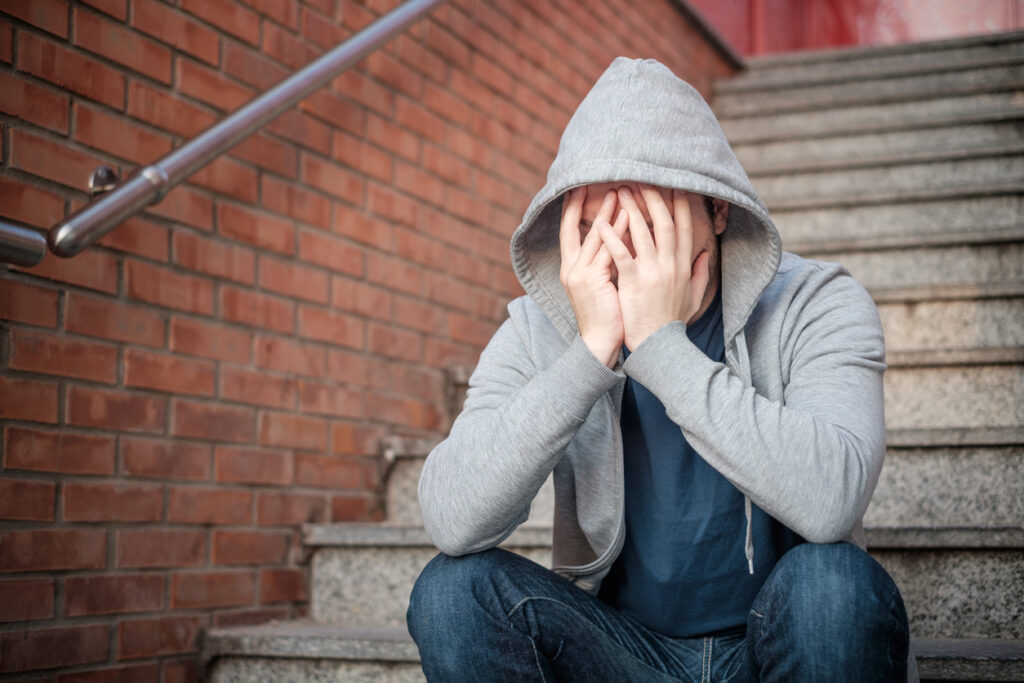


Watching a teenager battle constant anxiety can leave parents feeling completely lost, unsure of how to communicate, what steps to take, or which clinical interventions actually offer relief. To help families navigate this challenging time, we sat down with two of Evolve’s clinical experts, Jordan Carter, LCSW (Director of Outpatient Programs), and Dr. Arthur Chou, MD (Outpatient Medical Director). In this guide, they answer the most common questions parents ask about recognizing the signs of anxiety in teens, utilizing therapy, improving home support, and navigating psychiatric medication within teen anxiety treatment.
Part 1: Recognizing and Supporting Teen Anxiety
With Jordan Carter, LCSW
What exactly is anxiety?
Simply put, anxiety is the body’s natural alarm system. It triggers our fight-or-flight response when there is an immediate threat. Inherently, anxiety is not bad. However, it becomes problematic when the worry is constant. When there is a constant hum of worry and anxiety that never fades, it starts to impair a teenager’s daily functioning.
What are the common signs of anxiety in teens?
Anxiety in teens is incredibly common. About 1 in 3 teenagers struggle with it. While people assume anxiety just looks like nervousness or worry, it can actually present as irritability, defiance, anger, and withdrawal from friends. You might also notice a drop in their grades or an extreme shift toward perfectionism.
Is my teen just stressed, or is it an anxiety disorder?
Teens face a lot of stress today, making it hard to decipher between normal stress and an anxiety disorder. The biggest difference is duration. If your teen is stressed about an upcoming test, they take the test, and the stress goes away. For teens struggling with an anxiety disorder, the test ends, but the constant hum of worry remains and quickly shifts to the next perceived threat.
How do you talk to your teen about their anxiety without them shutting down?
Teens are very quick to shut down if they feel judged. Approach the conversation with curiosity and validation. Make a gentle observation rather than an accusation, such as, “I notice you’ve been really stressed lately.” If they open up, validate their experience by saying, “That does sound really hard, I can understand why you’re stressed.” If they aren’t ready to talk, offer your support and let them know you are there when they are ready.
How can I help my teen with their anxiety at home?
An anxious brain needs a stable foundation. You can help by maintaining structure at home by ensuring they eat a healthy diet, get physical activity, and stick to a consistent sleep-wake routine. Additionally, kids learn stress management by observing their parents. You must model healthy stress management yourself if you want your teen to learn how to cope effectively.
Does allowing my teen to avoid sources of anxiety enable or worsen it?
We call this the “avoidance trap” or the “anxiety monster.” The more a teen avoids the things that make them anxious, the bigger the anxiety monster becomes. By simply pushing the anxiety down the road, they never learn how to deal with the trigger in the moment. When they inevitably face a similar situation again, it will provoke even more anxiety because they avoided learning the necessary coping skills the first time.
Can anxiety cause physical symptoms?
Absolutely. The mind and body are deeply connected. When a teen feels anxious, their brain is flooded with stress hormones. This often manifests physically as stomach aches, digestive issues, tension headaches, a racing heart, or nausea. If your child complains of frequent physical symptoms but has a clean bill of medical health, it is likely related to anxiety.
When should you seek professional help for your teen’s anxiety?
You should seek professional help when the anxiety starts impairing your child’s daily functioning. This looks like withdrawing from friends, refusing to attend school, constant family conflict, or physical symptoms that keep them from doing the things they used to enjoy.
What is the best treatment approach for teens with anxiety?
The gold standard is a combination of talk therapy and, if needed, medication. Cognitive Behavioral Therapy (CBT) is highly effective for addressing your teen’s negative thinking patterns to reduce anxiety. Dialectical Behavior Therapy (DBT) provides excellent tools for emotion regulation, giving your teen actionable skills to manage moments of high stress.
What are some coping skills that can help teens in the moment?
Three simple, effective tools include Box Breathing, Self-Soothing, and the TIPP skill. Box breathing involves a four-count cycle: inhale for four, hold for four, exhale for four, and hold for four. Self-soothing involves grounding the senses, such as smelling an essential oil or listening to music. Finally, the Temperature aspect of the TIPP skill involves physically shifting the nervous system by splashing cold water on the face or holding ice to the cheeks.
Part 2: Navigating Medication in Teen Anxiety Treatment
With Dr. Arthur Chou, MD Board-Certified Child & Adolescent Psychiatrist
What medications are usually prescribed for teen anxiety?
The first-line choices for teen anxiety are Selective Serotonin Reuptake Inhibitors (SSRIs). The most common are fluoxetine (Prozac) and sertraline (Zoloft), as they have the most clinical studies proving their efficacy. Second-line medications, which have less clinical backing and are used off-label, include gabapentin, propranolol (a blood pressure medication), and hydroxyzine (a strong antihistamine). We rarely use benzodiazepines (like Xanax or Ativan) because they carry a high risk of addiction and physiological dependence, though they may be used in highly selective, short-term scenarios.
How do I know when things have gotten bad enough to consider medication?
This starts with a personalized psychiatric evaluation to assess the teen’s symptoms, medical history, and genetics. We rely heavily on the severity of the anxiety and their current phase of treatment. For mild anxiety, where a teen might fret excessively over a text message but still maintains good grades and healthy friendships, psychotherapy is the starting point. If they have done 6 to 8 weeks of therapy with no change, or if their anxiety is moderate to severe, meaning they are refusing school, losing weight from skipping meals, or staying awake until 3 a.m. out of worry, medication is strongly considered.
How long does it take for the medication to work?
SSRIs generally take about four weeks to start showing a clinical benefit, with continued improvements building at 8 and 12 weeks as the dose reaches its full potential. You might notice subtle shifts in the first week, which can be partially placebo but also linked to rapid changes in how the brain processes social cues. Second-line medications like propranolol can work within a few hours to reduce physical panic symptoms before a presentation, but they do not provide the sustained, long-term neuroplastic benefits of SSRIs.
What do anxiety medications actually do to the brain?
We used to think these medications simply fixed a “chemical deficiency,” but modern research shows they actually promote neuroplasticity. By changing how genes are expressed and proteins are created, they alter connections in areas like the hippocampus (memory) and prefrontal cortex (decision-making). They change the connectivity between the brain’s reward and emotional processing circuits. This helps “unstuck” an anxious brain, allowing teens to be less rigid. They also quickly change social-emotional processing, stopping teens from instantly misinterpreting ambiguous facial expressions as critical or angry.
What are the side effects parents should watch for?
About 60 to 80 percent of teens experience no side effects at all. For the 20 to 40 percent who do, common side effects are mild and self-resolving, feeling much like a mild cold: nausea, headaches, jitteriness, or fatigue. A smaller group (20 to 30 percent) may experience affective blunting (feeling less intense joy) or sexual side effects like decreased libido, both of which are fully reversible if the dose is lowered or stopped. A rare but serious risk is suicidal thoughts, occurring in 1 to 4 percent of teens during the first month. Doctors monitor this very closely, but it is important to remember that untreated anxiety and depression carry a significantly higher risk of suicide than the medication itself.
Will medication mess with my teen’s development or puberty?
In general, no. Studies show no significant impact on puberty or adolescent development. A few studies have suggested SSRIs might cause a very minor decrease in height growth (about 1 to 1.5 centimeters), but not all studies agree, and no other developmental milestones are impacted.
Are there natural alternatives that actually work?
There are no FDA-approved natural first-line treatments for anxiety. Supplements like vitamin D, fish oil, valerian root, and magnesium have some evidence backing them, but their benefits are generally much weaker than an SSRI (e.g., a 30% reduction in symptoms versus a 50-60% reduction). Furthermore, “natural” does not mean safe. Naturally occurring substances like lithium or digitalis have very narrow therapeutic windows and can be deadly if misused. When considering supplements, rely on peer-reviewed journals, check for FDA recalls, and weigh the steep monthly costs against the actual benefits.
Does my teen still need therapy if they take medication?
Yes. Treating an anxiety episode generally takes 9 to 12 months. The first three to four months are the “recovery period,” where weekly or bi-weekly therapy is highly recommended alongside the medication to help them actively change their habits. The next six to nine months are the “maintenance period.” During this time, therapy can be dialed back to once a month or even become optional, while the medication sustains their progress.
Will my kid have to take these pills for the rest of their life?
Likely not. Most teens take anxiety medication for the full 9 to 12-month treatment cycle and then successfully taper off. Completing the full maintenance period is critical; stopping medication too early leaves a 50 percent chance the anxiety disorder will relapse, whereas finishing the maintenance phase drops that risk to 20 or 30 percent. Think of it like a cast on a broken bone. The bone may heal quickly, but you leave the cast on longer to ensure the bone stays strong. Keeping the medication going ensures the new neuroplastic connections in the brain are durable before you remove the support.
Are these medications addictive?
No. Addiction involves a complete loss of control, compulsively seeking out a drug even as it destroys a person’s life, relationships, and finances. Teens are not chasing a high with Prozac or Zoloft. However, the body does adapt to the medication, meaning stopping cold turkey will cause “discontinuation symptoms.” This feels like a bad flu, complete with muscle aches, irritability, and harmless but uncomfortable “brain zaps.” To avoid this, a doctor will always create a gradual taper plan to safely ease your teen off the medication.
How will we know if the medication is actually working?
While we want your teen to tell us they feel better, self-reporting isn’t always reliable. The truest measure of success is a return of their daily functioning across four developmental tracks. First, we look at relationships. Are they communicating better with family and hanging out with friends? Second, we look at academics. Are they attending school and learning? Third, are they returning to their hobbies and passions? Finally, we look for emotional maturity and better decision-making. Mental illness throws teens off these developmental tracks; effective treatment gets them back on.
About the Authors
Arthur Chou, MD
Arthur Chou, MD, is a board-certified physician specializing in child and adolescent psychiatry and a psychiatrist at Evolve Treatment Centers. He works with adolescents experiencing complex mental health and behavioral challenges. View Dr. Chou’s professional profile to learn more about his credentials, clinical experience, and areas of expertise.
Jordan Carter, LCSW
Jordan Carter, LCSW, is a Licensed Clinical Social Worker and Director of Outpatient Programs at Evolve Treatment Centers. With more than 13 years of experience in the mental health field, she specializes in supporting high-acuity adolescents and has advanced training in Dialectical Behavior Therapy (DBT). View Jordan Carter’s professional profile to learn more about her credentials, clinical experience, and areas of expertise.