

The school year can stir up a whirlwind of emotions like test stress, friendship drama, or frustration in class. If you’re a teen feeling overwhelmed, or a parent wanting to support your child, you’re not alone. Dialectical Behavior Therapy (DBT) offers simple, evidence-based tools to manage intense feelings and stay grounded. Here are four DBT skills for teens that are perfect for teen to use at school because they’re discreet. No one will notice you using them and they’ll help you stay calm and focused during class.
The video above covers this blog.
Dialectical Behavioral Therapy Skill #1: TIPP Skill
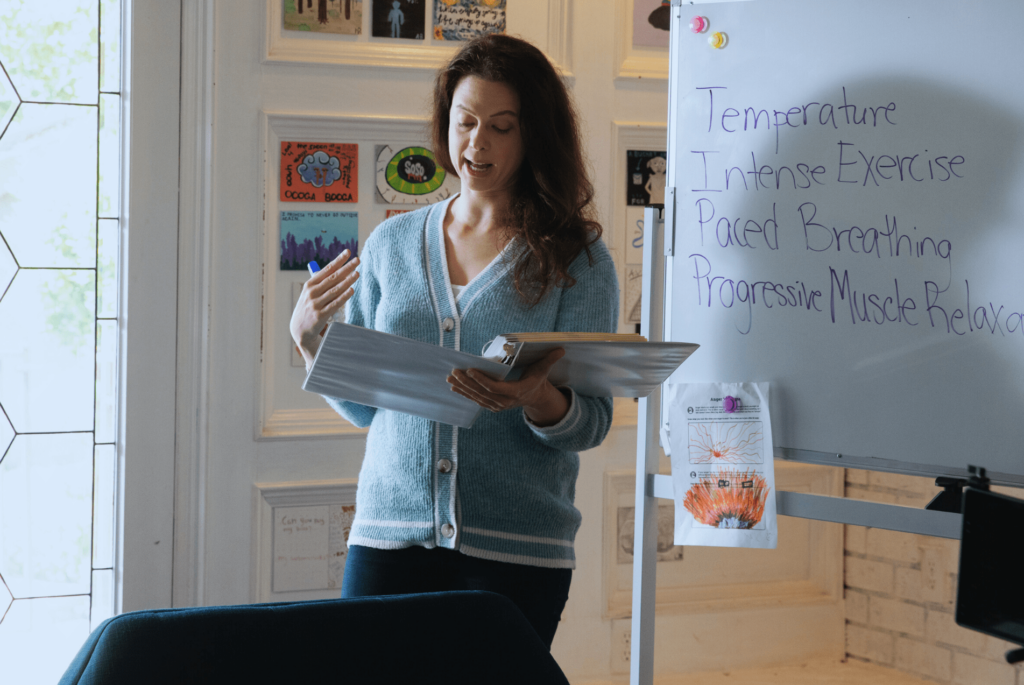
Sometimes emotions can feel super intense and hard to handle, especially during stressful times at school like a tough test or a heated moment with friends. When emotions feel out of control, like during a tough test or a heated moment, the TIPP skill helps you reset fast. TIPP stands for Temperature, Intense exercise, Paced breathing, and Progressive muscle relaxation. At school, paced breathing and progressive muscle relaxation are the most discreet so let’s focus on those.
Paced Breathing
How it helps: Paced breathing activates your body’s natural calming system, reducing stress and anxiety. By focusing on slow and controlled breaths you’re telling your brain that it is safe to relax, making intense emotions easier to manage. You can do it quietly at your desk or wherever needed without others realizing.
How to do it: Inhale through your nose for 4 seconds, hold for 5, exhale through your mouth for 6. Repeat 3–5 times or as needed.
Progressive Muscle Relaxation
How it helps: When we get stressed out or have big emotions we tend to tighten our body without realizing it. We clench our fists and stiffen our shoulders or neck. Progressive Muscle Relaxation helps you calm your body and relax your mind.
How to do it: Tense different muscle groups such as your calves, thighs, or hands by squeezing for a few seconds, then release to feel the relaxation. Repeat as needed to calm your body and ease mental stress.
Dialectical Behavioral Therapy Skill #2: Self-Soothe
How it helps: As a teen, school can bring a lot of stress. The Self-Soothe skill helps you find comfort during difficult moments. These small actions help your body and mind calm down when you’re upset.
How to do it: Do comforting things that engage your senses. For example, use a fidget toy or smell essential oils during class, and during breaks, listen to music or look at pictures that make you happy.
Dialectical Behavioral Therapy Skill #3: Opposite Action
How it helps: Sometimes our emotions can lead us to do things that don’t really help, like hiding when we’re anxious or snapping when we’re angry. Opposite action invites you to try doing the opposite, which can help your feel proud of your actions, improve your mood, and help you feel better.
How to do it: Name the emotion you are feeling. Notice what your emotion urges you to do. Choose an opposite action that goes against this urge. Do the opposite action for a while, then notice how you feel afterward.
Dialectical Behavioral Therapy Skill #4: STOP Skill
How it helps: Big emotions can lead to impulsive reactions, like arguing with a friend or talking back to a teacher. The STOP skill gives you a moment to pause and choose a better response.
How to do it: STOP stands for stop, take a step back, observe the situation, and proceed mindfully. Follow these steps during tense moments to give your brain a break before you act, so you are less likely to make choices you’ll regret and more likely to feel in control of your feelings.
Mastering Your Emotions with DBT Skills for Teens at School

Using DBT skills like progressive muscle relaxation, paced breathing, opposite action, self-soothe, and the STOP skill can really support you in handling stress and big emotions at school. These tools help you stay calm, make thoughtful choices, and tackle challenges with confidence. With a bit of practice, they’ll feel like second nature, helping you feel stronger and more at ease so you can focus on your goals and enjoy school life. You’ve got this!
About the Author
This content was clinically reviewed by Jordan Carter, LCSW. Jordan brings over 13 years of frontline experience to this article, specializing in Cognitive Behavioral Therapy (CBT) and family dynamics. As our Director of Outpatient Programs, she helps bridge the gap between treatment and home life. You can rely on her guidance for practical, evidence-based strategies that help families navigate recovery in the real world.