
Teen PHP Schedule
At Evolve, partial hospitalization treatment is designed to give teens the significant clinical support and daytime structure they need to engage in treatment, build coping skills, and create lasting change. Here is a closer look at what an average week and day looks like in our partial hospitalization programs.
A Week at Evolve PHP
Evolve’s Partial Hospitalization Program (PHP), also known as a full-day program, is designed for teens whose mental health or substance use challenges make it difficult to attend school or function safely in their daily lives. Teens participate in a structured, comprehensive day of treatment five days a week, with dedicated time for individualized academic support, individual and family therapy, psychiatry, group therapy, and other individualized components of care. This intensive schedule provides the clinical support, structure, and family involvement teens need while allowing them to return home each evening.
Please note that this is a sample schedule. Schedules vary by location, and program hours may differ during the summer.
- 4 total sessions weekly, including 2 individual therapy, 1 family therapy, and 1 psychiatry session
- 4 therapy groups per day
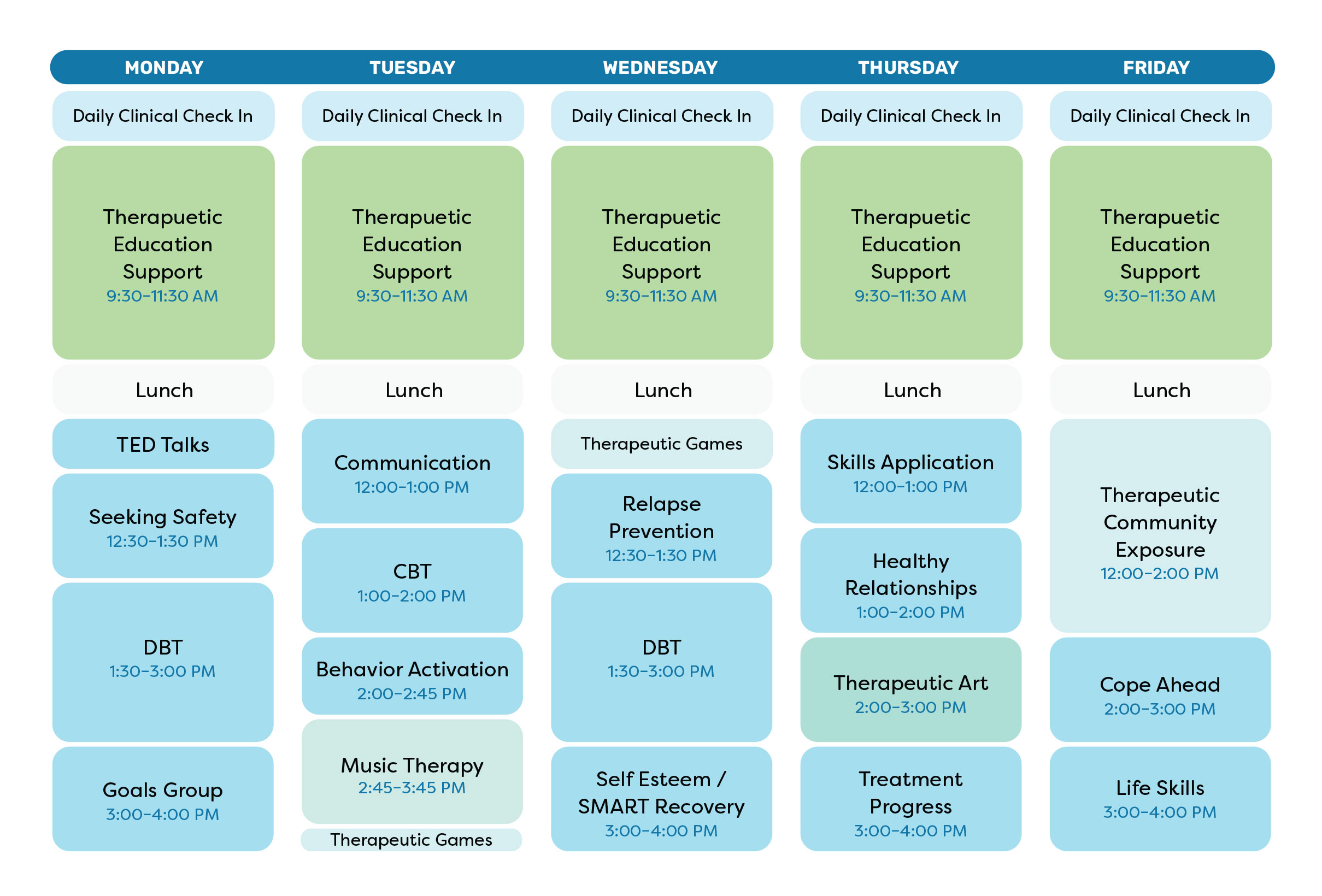
Understanding Each Part of the Schedule
With every aspect of our programming guided by intention, compassion, and accountability, every element of a teen’s daily schedule plays a role in their healing. Explore the sections below to see how each part of the day supports stability, skill-building, and lasting change.
👥💬 Clinical Check In
During Clinical Check-In, clients meet with staff to review their therapeutic diary cards and reflect on their thoughts, emotions, urges, behaviors, and use of coping skills. This process helps teens build mindfulness, recognize patterns, and better understand how their emotions and skill use influence their actions. It also gives staff insight into how each teen is entering treatment that day and whether they may benefit from additional support or in-the-moment skills coaching. By identifying needs early, Clinical Check-In helps prepare both teens and staff for a successful day of treatment.
📚 Education Time
At Evolve, teens continue their education in a calm, structured classroom setting where counselors provide daily support. Each student completes at least two hours of schoolwork every weekday (less during summer). School time is both academic and therapeutic, giving teens a chance to stay connected to their coursework while practicing the coping skills they are learning. Our goal is to help teens maintain academic momentum, rebuild confidence, and return to school feeling prepared and capable.
🥗 Lunch
Lunch is provided each day and our clients and staff enjoy meals together. We can accommodate any dietary or religious restrictions.
👥👥 Clinical Groups
Group therapy is a vital part of our treatment approach. Each day, teens participate in four group sessions. Topics include Cognitive Behavioral Therapy (CBT), Relapse Prevention, Seeking Safety, Anger Management, Healthy Relationships, Life Skills, Communication, Self-Esteem, Coping Ahead, Skills Application, Behavioral Activation, Creative Writing, Therapeutic Art, and Self-Identity.
⚙️ DBT Skills Training
Evolve is especially known for our strong focus on DBT, a structured, skills-based therapy proven to help teens who struggle with intense emotions, strained relationships, or impulsive behaviors. All our programs include two 90-minute DBT skills training groups per week, led by our clinical director and primary therapists. Teens learn essential skills in Mindfulness, Interpersonal Effectiveness, Emotion Regulation, and Distress Tolerance, then practice them throughout the week with counselors and skills coaches.
🎨 Experiential Therapy
Experiential therapies includes art and music therapy. These groups support emotional growth and skill development. Our goal is to help teens create safe, positive experiences, explore their identities, and find activities that bring them joy and purpose.
⛳️ Therapeutic Outing
On Fridays, we enjoy supervised community outings. These activities reward hard work and give teens a safe, supportive way to practice skills in the community and build healthy social connections.
What’s Happening Behind The Scenes That You Don’t See on the Schedule
A treatment schedule can show groups, meals, school time, and activities, but it does not always show the full clinical support happening throughout the day. At Evolve, each teen is supported by a multidisciplinary team that includes board-certified child and adolescent psychiatrists, licensed therapists, nurses, residential counselors, and skills coaches.
Psychiatry Support
Each teen meets with a psychiatrist weekly, or more often when clinically indicated. Psychiatry sessions are scheduled throughout the week, with care taken to ensure teens are not pulled from core clinical groups. Our psychiatrists work closely with the primary therapist to support accurate diagnosis, monitor progress, and make thoughtful adjustments to each teen’s treatment plan. This helps ensure psychiatric care is safe, coordinated, and responsive throughout the teen’s stay.
Individual & Family Therapy
Teens meet with their primary therapist at least two times per week for individual therapy. Therapists also provide weekly family therapy and work closely with parents to schedule sessions at times that support both the family’s availability and the teen’s treatment plan. Like psychiatry sessions, individual and family therapy are scheduled in a way that protects time for core clinical programming.
Skills Coaching
A key part of treatment at Evolve is real-time skills coaching. Teens are not only learning DBT and therapeutic skills in groups and individual therapy, they are practicing those skills throughout the day with support from trained staff. Our counselors are available during program hours to help teens use coping skills when challenges arise. This hands-on practice helps teens build confidence using their skills outside of formal sessions, supporting long-term progress beyond treatment.